Snow conditions can shift from sunshine to cloud within hours. The lens that feels comfortable under a clear sky may hide surface details after the light fades. Retailers should select lens colors around actual skiing conditions.
Color alone does not explain how a goggle performs. Visible light transmission, contrast, glare control, and lens construction all affect the view. Assortments should cover sunshine, flat light, and illuminated slopes.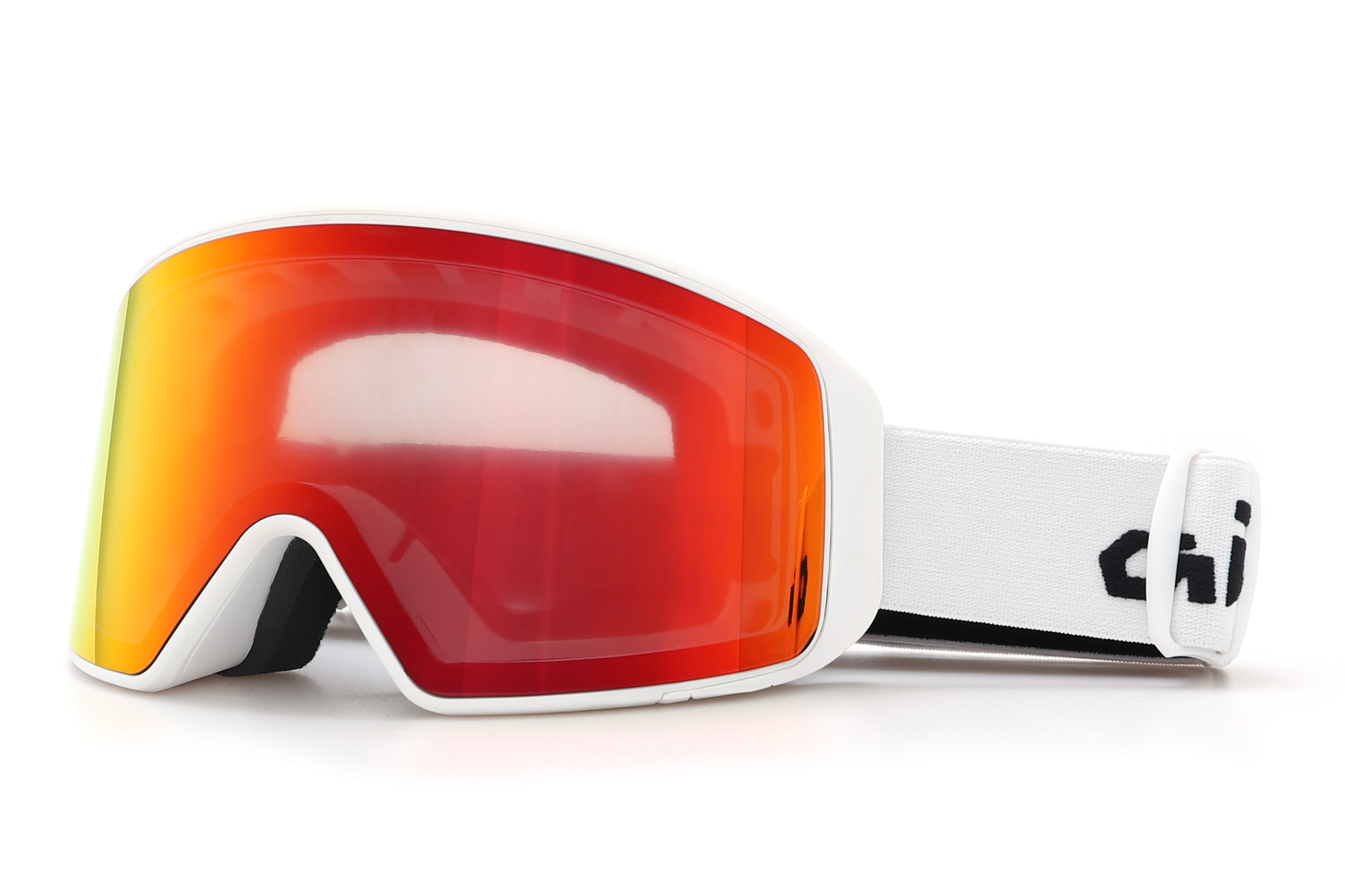
Visible light transmission, or VLT, describes the percentage of visible light passing through a lens. Lower VLT means a darker lens, while higher VLT allows more light through. Request measured figures rather than judging photographs.
Lens categories provide a useful starting reference. Roughly 8–18% VLT is commonly associated with bright sunlight, while 43–80% suits many low-light conditions. Clear lenses with very high transmission are generally preferred for night skiing. Terrain and lighting still matter.
When comparing best skiing goggles, buyers should look beyond appearance and ask for lens-specific data. Mirror finishes, base tints, and coatings can change transmission. Similar-looking lenses may have different test results.
Fresh snow reflects strong sunlight, especially on open slopes. Gray and brown tints are common choices because they reduce visible brightness. Copper shades may also be considered where the wearer wants some contrast alongside sun protection.
Dark or mirrored lenses can feel comfortable in exposed terrain, but they may become inconvenient under trees or when clouds move in. Describe intended light conditions rather than promising all-day suitability.
Some buyers request polarized ski goggles to reduce reflected glare. Polarization can help in certain bright settings, but it may also make icy surface reflections harder to interpret. Test samples on snow before making downhill-use claims.
Flat light occurs when clouds and diffuse illumination reduce shadows on the snow. Small bumps and changes in terrain become harder to distinguish. Lenses that admit more light and support contrast perception are often more useful than dark sun lenses.
Rose, amber, and yellow tints are commonly considered for overcast weather. Their effect depends on the complete lens design, not the tint name alone. Compare approved samples outdoors under comparable cloudy conditions.
Buyers comparing best skiing goggles may include a medium-transmission lens for variable weather and a lighter option for heavily overcast days. This gives customers a clearer choice than a single all-weather description. List VLT and intended conditions separately.
Artificial lighting creates a different viewing environment. At night, the priority is letting sufficient light reach the eyes while keeping the lens optically clear. Transparent or nearly clear lenses are usually the appropriate starting point.
Dark mirrors and strong sun tints reduce available light and are generally unsuitable for night sessions. Likewise, polarized ski goggles should not be marketed for night use without careful evaluation of their actual transmission and visibility under slope lighting.
Retailers should also consider fogging when customers move between warm buildings and cold slopes. Anti-fog construction can help manage condensation, although results depend on ventilation, temperature, and care. Explain visibility needs without promising fog-free performance.
Tint is only one part of a goggle specification. UV protection, lens material, field of view, and facial fit also matter. A UV400 claim addresses ultraviolet protection; it does not tell buyers whether a lens is bright enough for overcast conditions.
For example, our YH857 magnetic snow goggles use a TPU frame and PC lens. The listed features include a wide field of vision, UV400 protection, double-layer anti-fog construction, and polarization. Three layers of high-density breathable sponge support the fit. Specific tint options and VLT values should be confirmed for each ordered configuration.
At YIJIA Optical, we approach such specifications as separate questions: which light condition is targeted, what lens performance is documented, and how will customers use the product? This helps keep discussions about function distinct from choices about appearance or branding.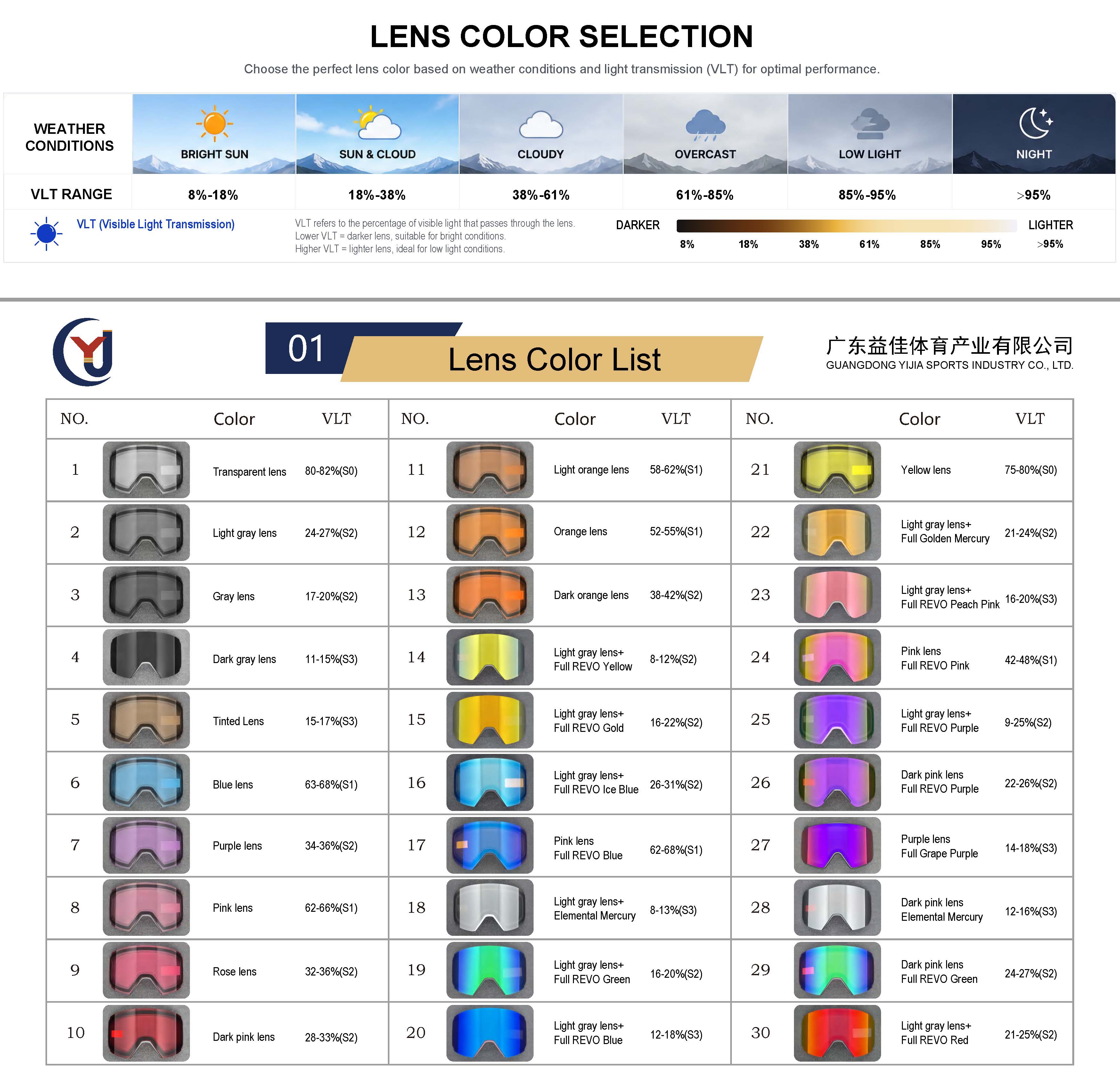
Wholesale teams can build a simple matrix showing weather conditions, lens color, measured VLT, available features, and approved samples. Keep night-skiing options separate from darker sun lenses. Note whether polarized versions have been evaluated for the intended slopes.
When sourcing best skiing goggles, ask suppliers to identify the precise lens configuration behind each specification. A sample with one coating or tint does not validate every variation. Consistent descriptions also reduce confusion between purchasing teams, online listings, and end users.
We support OEM and ODM projects, including custom branding and colors. YIJIA Optical can discuss conditions and sample requirements before production. Buyers should confirm each chosen configuration against the approved sample and agreed inspection criteria.
A useful lens range does not need dozens of vague color names. It needs clear roles: darker options for bluebird days, lighter contrast-oriented tints for flat light, and clear lenses for night skiing. Measured transmission should anchor those choices.
For distributors evaluating polarized ski goggles, the same principle applies: compare visibility in the intended environment instead of relying on a feature label. Documented specifications help retailers plan assortments for real conditions.

